Do Solar Panels Actually Work In Michigan? Yes, But Your Roof Gets A Vote.
Michigan homeowners ask a fair question:
Do solar panels actually work here?
Because this is not Arizona. This is Michigan. We have clouds, snow, ice, trees, lake-effect mood swings, and weeks where the sun appears to be working part-time.
So if you live in Rochester, Troy, Bloomfield Hills, Sterling Heights, Shelby Township, Clinton Township, Macomb Township, or anywhere around Oakland County and Macomb County, it makes sense to ask before putting panels on your roof.
Short answer: yes, solar panels can work in Michigan.
Better answer: they work best when your roof, shade, utility setup, and energy goals all make sense.
Michigan Gets More Solar Potential Than People Think
Solar panels do not need beach weather to produce electricity.
The U.S. Department of Energy says solar panels are built to work in all climates. That includes places with cold weather, cloudy days, and seasonal changes.
The real question is not “does Michigan get enough sun?”
The real question is:
Does your specific roof get enough usable sun?
That depends on:
Roof direction
Roof slope
Tree shade
Roof age
Roof size and shape
Nearby buildings
Chimneys, vents, and skylights
How much electricity your home uses
Solar is local. Very local. Sometimes “your neighbor’s roof works great” and “your roof is shaded by a maple tree with main-character energy” can both be true.
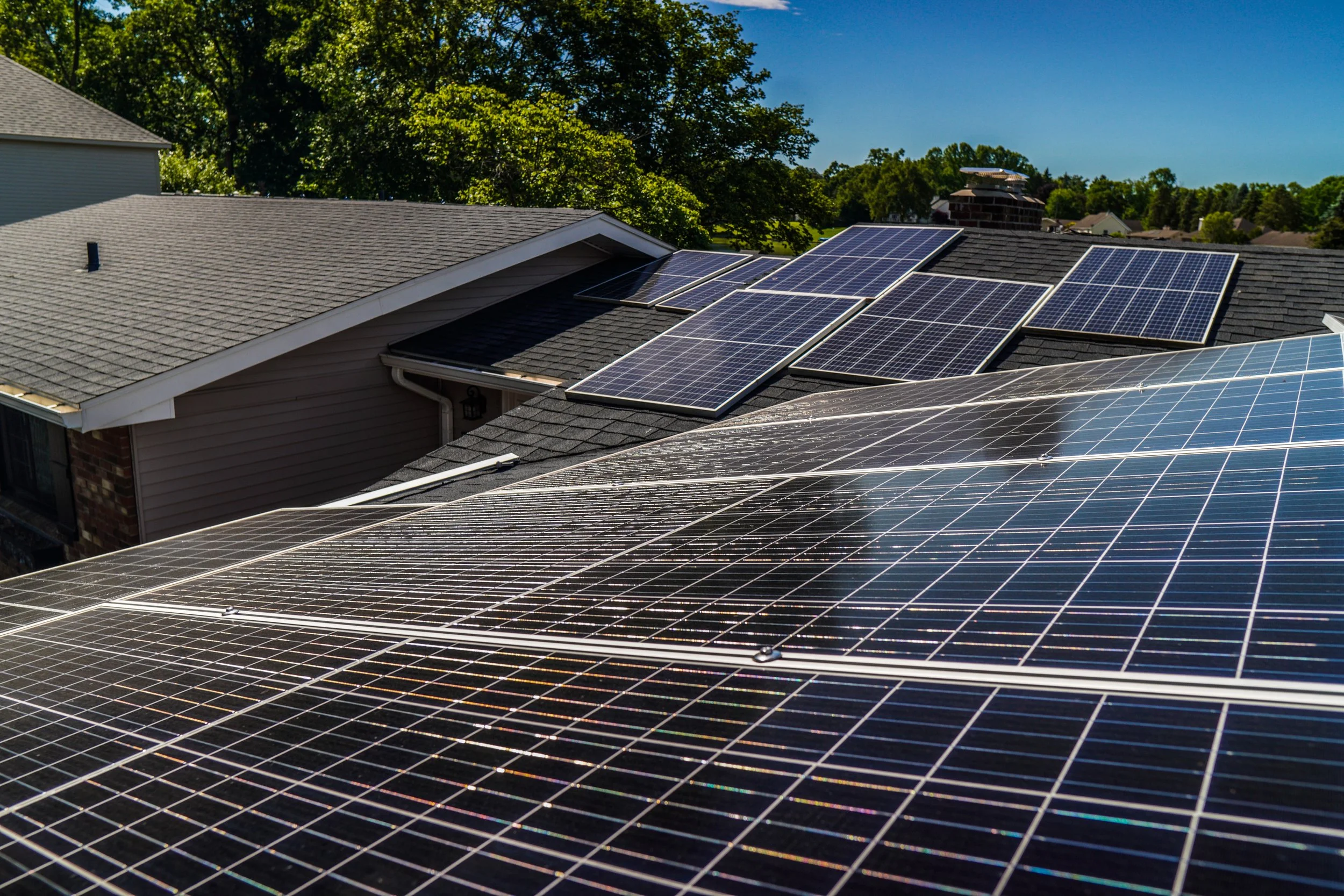
Image: Asbury Roofing & Solar residential solar job site
Winter Is Not A Solar Dealbreaker
Snow and shorter winter days can reduce production. That is normal.
But cold weather itself is not the enemy. Solar panels can still produce power in cold conditions when sunlight reaches the panels.
The bigger winter issue is usually snow coverage, roof pitch, shading, and shorter daylight hours.
That means solar planning in Michigan should consider:
How snow sheds from the roof
Whether panels will sit under heavy shade
Whether the roof pitch helps snow slide off
Whether tree limbs hang over the roof
Whether the roof is already dealing with ice dam problems
Solar panels are long-term equipment. They should be planned for all four Michigan seasons, not just the one week in July when everyone suddenly remembers why they live here.
Your Roof Comes First
Before homeowners in Oakland County or Macomb County install solar, they should inspect the roof.
This matters because solar panels sit on the roof. If the roof is old, leaking, storm-damaged, or close to replacement age, installing solar first can create extra work later.
Before going solar, ask:
How old is the roof?
Are shingles curling or losing granules?
Is there hail or wind damage?
Are there leaks or attic moisture?
Is the decking solid?
Are gutters and drainage working?
Does the roof have enough open, sunny space?
Should roof repair or replacement happen before solar?
Putting solar on a roof that needs replacement soon is like buying a new phone case for a phone that is already in a lake.
Ambitious. Not ideal.
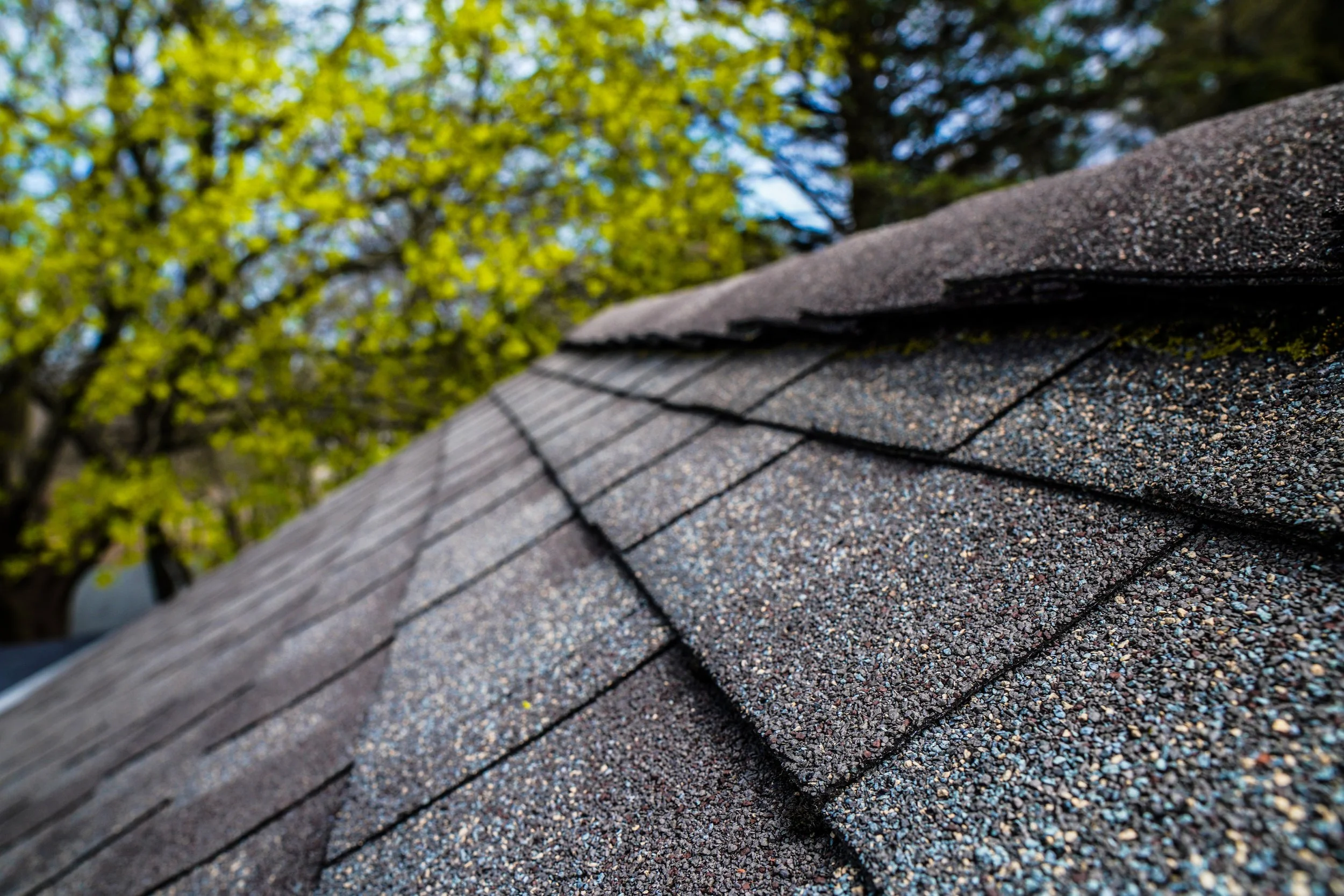
Image: Owens Corning Shingles
Utility Rules Matter In Michigan
Solar savings depend on more than panels.
They depend on your electricity usage, system size, utility rates, financing, roof exposure, and how excess energy is credited.
Michigan uses distributed generation rules for customer-owned generation. The Michigan Public Service Commission explains that customers can generate some or all of their own electricity, but utility-specific program details matter.
That means homeowners should ask:
Which utility serves my home?
How is excess solar energy credited?
What fixed charges still apply?
What system size fits my usage?
How does battery storage affect the plan?
What happens if I sell the home?
Solar math should be based on your actual home.
Not vibes. Not a glossy brochure. Not a guy at your door saying, “This basically pays for itself,” while speed-running paperwork.
Batteries Are Worth Discussing
More Michigan homeowners are asking about solar batteries because power outages are not exactly rare.
Battery storage can save solar energy for later use. With the right system design, it may also help power selected parts of the home during an outage.
That could include:
Refrigerator
Internet
A few lights
Sump pump
Medical devices
Key outlets
Important detail: solar panels alone may not keep your home powered when the grid goes down. Many grid-tied systems shut down during outages unless they are designed with the right battery and backup equipment.
So the question is not just “should I get solar?”
It is “what do I want solar to do?”
Lower bills? Backup power? Long-term home value? Cleaner energy? All of the above?
Different goals need different system designs.
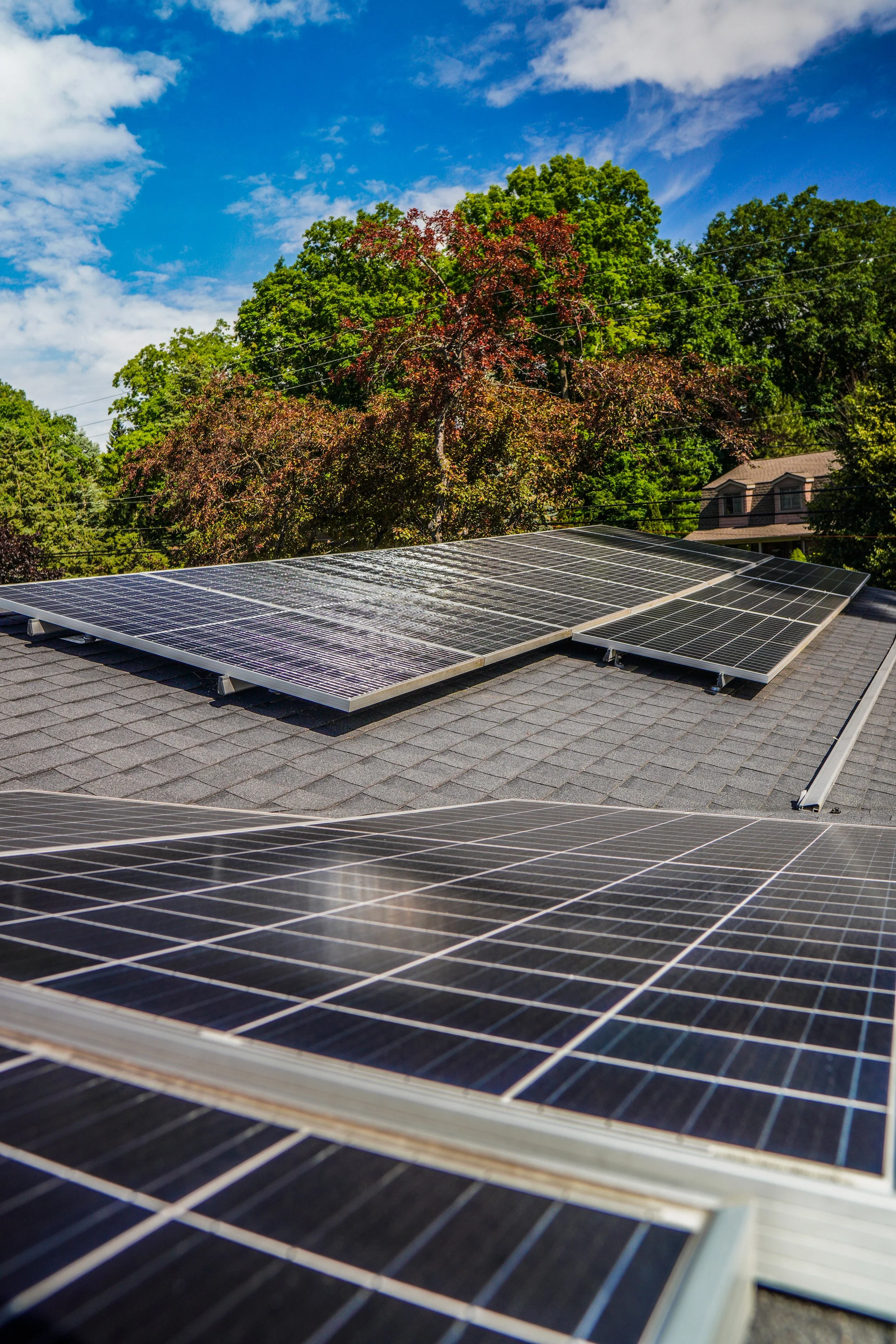
Image: Asbury Roofing & Solar residential solar job site 02
Watch Out For Bad Solar Promises
The FTC recommends homeowners understand whether they are buying, leasing, or signing a power purchase agreement before agreeing to solar.
That matters.
A good solar conversation should explain:
System ownership
Financing terms
Utility rules
Expected production
Roof condition
Battery options
Contract details
What happens if you sell the home
If someone promises guaranteed savings, avoids contract questions, or acts like the roof condition is a minor detail, slow down.
Solar can be a strong upgrade. It does not need fantasy math.
The Bottom Line
Solar panels can work in Michigan, including Oakland County and Macomb County.
But the best solar projects start with the roof.
Before installing panels, homeowners should check roof age, shade, storm damage, leaks, attic moisture, utility rules, battery goals, and whether roof repair or replacement should come first.
Asbury Roofing & Solar helps homeowners in Rochester, Oakland County, Macomb County, and nearby Southeast Michigan communities think through solar the right way: roof first, system second, sales nonsense nowhere.
Want to know if your Michigan roof is ready for solar?
Schedule your free estimate with Asbury Roofing & Solar: https://asbury.fillout.com/preproductionform
Or call: 248-965-0731